A Soulful Journey Through Kho Muong Village and Its Ancient Cave
I didn’t expect silence to be this loud. Discover Kho Muong Village and Bat Cave Hang Dơi A Hidden Gem in Pu Luong
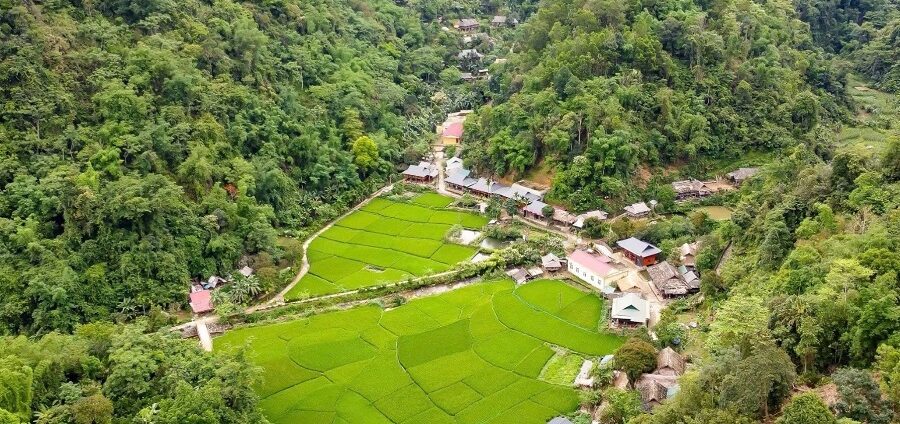
As I descended the dirt path into the Kho Muong Valley, flanked by limestone cliffs and layers of mist, the world above began to fade. There were no honking horns, no rumbling engines—only the distant call of birds and the quiet rustling of banana leaves. It was as if the valley was holding its breath, waiting for me to step inside.
This wasn’t just another village on my travel map. Kho Muong felt different—raw, remote, and deeply real.
First Glimpse: A Village Carved by Time
Perched gently in a sunken valley surrounded by towering karst mountains, Kho Muong Village is home to the Thai ethnic minority, whose wooden stilt houses dot the landscape like pieces of a living painting. There’s no artificial charm here. Everything feels untouched, from the hand-planted rice paddies to the woven bamboo walls soaked in sun and stories.
Children ran barefoot across the earth-packed paths. Elderly women sat weaving baskets by hand. Water buffalo grazed lazily in terraced fields while the stream danced beside them—sparkling under the late morning light. I was an outsider, yes—but somehow, I never felt like one.

Morning Moments: Life in Stillness
I woke up that day in a simple homestay at the edge of the village. No alarm. No phone signal. Just the soft coo of mountain doves and the smell of sticky rice cooking over firewood.
Breakfast was served on the balcony: black tea from the hills, boiled sweet potatoes, and warm, salted peanuts. The host’s daughter—barely ten—giggled as she tried to teach me a few Thai words. I failed miserably. But we laughed together anyway.
This is what travel should feel like—not rushed, not rehearsed—but human, warm, and unfiltered.
The Hidden Wonder: Kho Muong Cave (Bat Cave)
As the sun climbed higher, my host pointed toward the cliffs. “Hang Doi,” he said simply. “Bat Cave.”
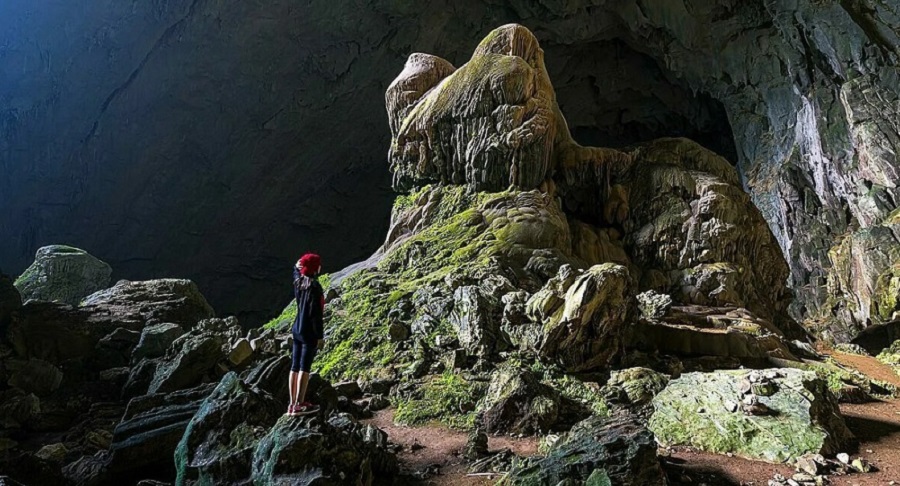
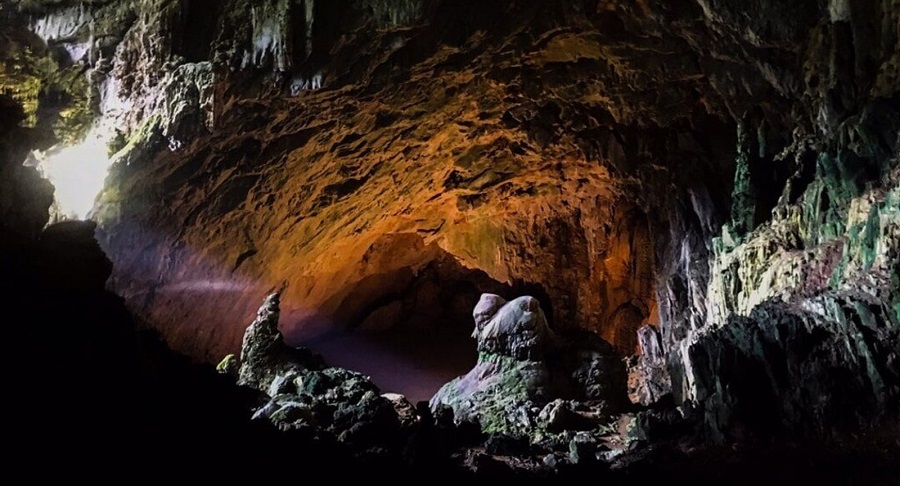
We followed a narrow trail that wound through dense greenery until a dark mouth appeared in the rock wall. Stepping inside Kho Muong Cave, I was struck by the scale. The ceilings soared above us like a cathedral. Stalactites hung like frozen waterfalls, dripping silently in the cool air.
Locals say the cave has existed for millions of years, carved by underground rivers. Its name—Hang Dơi—comes from the thousands of bats that once nested inside. I didn’t see any that day, but the silence of the cave had a voice of its own. Every footstep echoed like memory.
We walked deeper, flashlights bouncing off ancient formations, some shaped like dragons, others like human faces. Nature had sculpted art long before we ever tried.
A Walk Through Generations
The walk back to the village was quiet. Not from fatigue, but reflection.
I thought of how Kho Muong is still not connected by paved roads—how everything here is carried by hand, harvested by hand, built by hand. This isn’t poverty—it’s persistence. It’s community. It’s a rhythm of life that modern cities have forgotten.
At sunset, I sat by the rice fields and watched a farmer guide his ox back home. The light turned golden, then pink, then faded into a velvet sky pierced by a thousand stars. There were no hotel neon signs, no backpacker bars—just starlight and silence.
And in that moment, I understood: you don’t come to Kho Muong to “do things.” You come to feel something.
Why Kho Muong Left a Mark on My Heart
In a world that often feels too fast, too filtered, too full—Kho Muong is a place that whispers instead of shouts.
It’s where you trade Wi-Fi for waterfalls, concrete for karst, and deadlines for dinner with strangers who feel like family.
It’s not a place to check off your list. It’s a place to return to in your memories—again and again—each time life gets too loud.
Few Honest Tips
- Pack light but bring good shoes—the path in can be muddy, especially after rain.
- Stay overnight if you can. The magic happens in the early morning and late evening.
- Don’t expect luxury—expect honesty, kindness, and views that heal.
- Bring a small gift for your host (a photo, a small snack, a drawing from your child). It goes a long way.
Final Thought
I came to Pu Luong looking for nature. I found that, yes—but I also found humility, heritage, and humanity.
Kho Muong Village and Cave aren’t tourist attractions in the usual sense. They’re living, breathing stories—written into the land, the limestone, and the laughter of children playing in the fields.
So if your heart is tired of crowds, and your soul is aching for something simpler, take the winding road down into the valley.
You might just find yourself there, waiting. Discover Kho Muong Village and Bat Cave Hang Dơi A Hidden Gem in Pu Luong
FAQ – Discover Kho Muong Village and Bat Cave Hang Dơi: A Hidden Gem in Pu Luong
Useful answers for visiting Kho Muong Village and Bat Cave Hang Dơi in Pu Luong: trekking, limestone valley scenery, homestays, local culture, cave visits, family travel, packing tips and responsible tourism.
?
1. Why should I visit Kho Muong Village in Pu Luong?
+
Kho Muong Village is one of the most atmospheric places to visit in Pu Luong for travelers who want something quiet, raw and deeply authentic. Hidden in a limestone valley, the village offers rice paddies, wooden stilt houses, misty cliffs and a slower rhythm of life.
It is ideal for visitors who are tired of crowded tourist spots and want a meaningful connection with nature, local culture and rural Vietnam.
?
2. What makes Kho Muong Village a hidden gem in Pu Luong?
+
Kho Muong feels different because it has not been heavily commercialized. There are no neon signs, busy tourist streets or staged attractions. Instead, travelers find hand-planted rice fields, bamboo walls, dirt paths, grazing buffalo and families living close to the land.
Its charm comes from honesty and simplicity. You do not visit Kho Muong just to “see” something; you visit to feel the silence, the landscape and the human warmth of the valley.
?
3. Where is Kho Muong Village located?
+
Kho Muong Village is located inside Pu Luong Nature Reserve in Thanh Hoa Province, northern Vietnam. It sits in a sunken valley surrounded by karst mountains and terraced fields.
Because of its remote setting, reaching the village takes more effort than visiting the main tourist areas of Pu Luong. That extra effort is part of what makes the experience feel special.
?
4. What is Bat Cave, also called Hang Dơi?
+
Bat Cave, known locally as Hang Dơi, is a natural cave hidden in the cliffs near Kho Muong Village. Its name comes from the bats that once nested inside the cave.
Inside, travelers can see high ceilings, cool chambers, stalactites and ancient limestone formations shaped by nature over a very long time. The cave has a quiet, mysterious atmosphere that makes it one of the most memorable stops in the valley.
?
5. Is Bat Cave worth visiting?
+
Yes, Bat Cave is worth visiting if you enjoy natural landscapes, caves and off-the-beaten-path experiences. It is not a polished tourist cave with bright lights and paved walkways, so the visit feels more adventurous and real.
For many travelers, the best part is not only the cave itself, but also the walk through greenery and limestone scenery before reaching its dark entrance.
?
6. Is Kho Muong suitable for trekking?
+
Yes, Kho Muong is a good destination for trekking in Pu Luong. The paths may pass through rice fields, banana trees, bamboo groves, streams and small village trails.
The trek is best suited to travelers who enjoy nature walks and do not mind uneven or muddy paths. Good shoes are important, especially after rain, when the road into the valley can become slippery.
?
7. Can I stay overnight in Kho Muong Village?
+
Yes, staying overnight in Kho Muong is one of the best ways to experience the village properly. Simple homestays allow travelers to wake up to mountain sounds, smell sticky rice cooking over firewood and enjoy a slower start to the day.
Do not expect luxury. Expect basic comfort, local hospitality, simple meals and a peaceful atmosphere that is hard to find in larger tourist destinations.
?
8. What is the homestay experience like in Kho Muong?
+
A homestay in Kho Muong is usually simple, warm and personal. You may sleep in a traditional stilt house, share breakfast with your host family and enjoy tea, sweet potatoes or local snacks while looking out over the valley.
The experience is less about facilities and more about connection. Small conversations, shared laughter and quiet moments often become the most memorable part of the stay.
?
9. What should I bring when visiting Kho Muong and Bat Cave?
+
Bring good walking shoes, light clothing, a rain jacket, insect repellent, a flashlight or headlamp for the cave, a refillable water bottle and some cash in Vietnamese dong. A small daypack is useful for carrying essentials during the walk.
If you stay overnight, pack light. Rural paths can be muddy or uneven, so large rolling suitcases are not practical.
?
10. When is the best time to visit Kho Muong Village?
+
The best time to visit Kho Muong is during the drier months or rice seasons, when walking paths are easier and the valley is especially scenic. Early mornings and late afternoons are particularly beautiful, with soft light, mist and a calm village atmosphere.
After heavy rain, the landscape can be lush and dramatic, but paths may become slippery. Travelers should check local conditions before setting out.
?
11. Is Kho Muong suitable for families?
+
Kho Muong can be suitable for families who enjoy nature, simple stays and cultural experiences. Children may enjoy seeing buffalo, rice fields, village life and the entrance to Bat Cave.
However, families should be realistic about comfort and safety. Paths can be uneven, the cave is dark, and facilities are basic. A local guide is recommended, especially when traveling with children.
?
12. How can I visit Kho Muong responsibly?
+
Visit Kho Muong with respect for local life. Keep noise low, ask before taking photos of people, do not enter homes without permission and avoid leaving plastic waste behind.
Staying in a local homestay, hiring a local guide and buying meals or small products directly from villagers are practical ways to support the community. Kho Muong is not just a destination; it is a living village, and the best way to experience it is with patience and humility.


 FR
FR