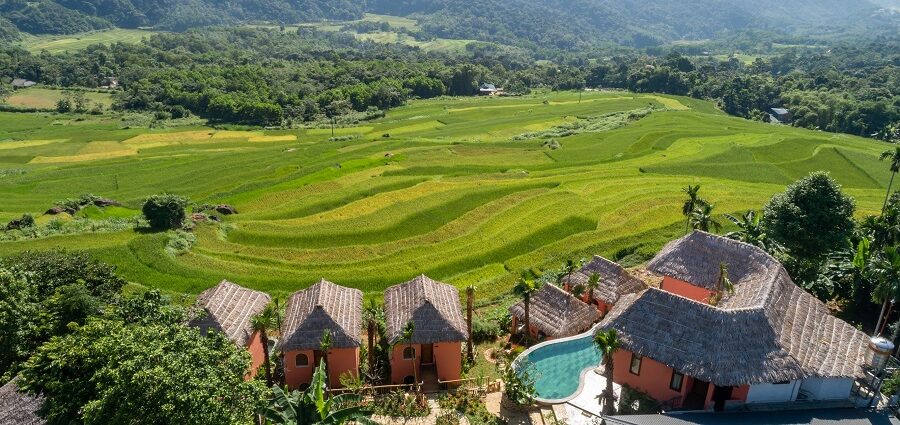
Turning With Time: A Peaceful Journey to Uoi and Lan Villages in Pu Luong
Hidden deep within the emerald folds of Pu Luong Nature Reserve are two humble villages: Uoi and Lan. While many tourists come for the views, few take the detour that leads to one of the most soulful slices of northern Vietnam where bamboo water wheels creak gently in the sun, and time seems to move with the rhythm of flowing streams. Visit Uoi and Lan Villages in Pu Luong Bamboo Water Wheels Trekking and Culture
A Morning Whispered in Mist
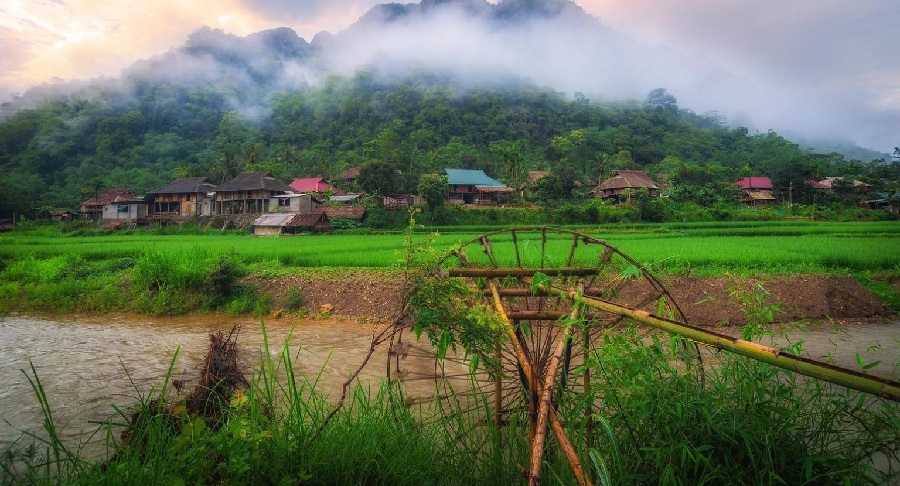
My day began with a gentle mist rising above the rice terraces. The air in Pu Luong always feels cleaner, but here in Uoi Village, it’s more than that it’s pure serenity. The only sound was the distant murmur of water and the slow creaking of bamboo. As I walked a winding path lined with banana trees, the morning light revealed the first bamboo water wheels of the day tall, elegant, and mesmerizing in their movement.
These traditional wheels, known locally as “guồng nước tre,” are ingenious hand-built systems made entirely of bamboo, used by the Thai people for generations to transport water from rivers to rice fields. Watching them spin felt like watching a dance steady, purposeful, and timeless.
Living Like Locals
In Lan Village, I was invited to join a family for lunch. Their stilt house overlooked the valley, and as we sat cross-legged on woven mats, they offered me bamboo shoot soup, sticky rice, and grilled mountain pork all grown or raised within walking distance. It was more than a meal; it was a cultural immersion.
They told me stories of their grandparents building the water wheels, of seasonal festivals filled with xòe dances and traditional gongs echoing through the valley. I realized how much of their life from agriculture to celebrations revolved around the slow but steady flow of water, carried by these bamboo masterpieces.
A Photographer’s Dream
If you’re into photography or content creation, Uoi & Lan are goldmines for natural beauty and cultural moments. The best shots come in the golden hours early morning or late afternoon when sunlight hits the spinning wheels just right, casting rippling shadows over the water.
Pro tip: Cross one of the small wooden bridges for a wide-angle view of several wheels turning in harmony. Locals are friendly and used to visitors, but always ask before taking close-up portraits, especially of elders.
Where Simplicity Shines
There are no resorts here. No luxury spas. Just home-cooked meals, stilt houses, and peaceful evenings under a blanket of stars. Yet, that’s exactly what makes Uoi & Lan unforgettable.
The villages embody what slow travel is all about being present, observing, learning, and connecting. Whether you’re weaving through narrow paths between fields, joining a family to make bánh ống (bamboo rice cakes), or sitting by the stream with your feet in the water, you’ll leave feeling lighter.
A Journey Worth Taking
Getting here takes some effort. Most travelers stay in Don or Kho Muong and take a motorbike or guided trek to Uoi & Lan. The road is partly paved, partly dirt, but accessible and entirely worth the detour.
The beauty of Uoi & Lan isn’t flashy. It won’t make headlines on Instagram reels. But it will sit with you, quietly, long after you’ve left. Maybe it’s the sound of bamboo creaking over water, or the smile of an old woman weaving by her porch whatever it is, it stays.
Final Thoughts
In a world racing for faster, louder, and bigger experiences, Uoi and Lan offer something radical: stillness. A reminder that travel isn’t always about checking off destinations, but about tuning in to the land, the people, and the gentle rotation of a bamboo wheel drawing life from a mountain stream.
So if you’re looking for the heart of Pu Luong, don’t just chase waterfalls or hike the peaks follow the water, and let it lead you to Uoi & Lan. Visit Uoi and Lan Villages in Pu Luong Bamboo Water Wheels Trekking and Culture
FAQ – Visit Uoi and Lan Villages in Pu Luong: Bamboo Water Wheels, Trekking and Culture
Useful answers for visiting Uoi and Lan Villages in Pu Luong: bamboo water wheels, trekking routes, Thai culture, local meals, homestays, photography, responsible travel and practical packing tips.
?
1. Why should I visit Uoi and Lan Villages in Pu Luong?
+
Uoi and Lan Villages are perfect for travelers who want to experience a quieter and more authentic side of Pu Luong. Instead of large tourist attractions, you’ll find rice terraces, bamboo water wheels, stilt houses, mountain streams and slow village life.
These villages are especially meaningful for visitors who enjoy cultural travel, photography, soft trekking and local encounters in northern Vietnam.
?
2. What are Uoi and Lan Villages known for?
+
Uoi and Lan are best known for their traditional bamboo water wheels, locally used to carry water from streams to rice fields. These hand-built systems are both practical and beautiful, showing how local Thai communities have worked with nature for generations.
The villages are also known for peaceful rice terraces, home-cooked meals, stilt houses, narrow walking paths and a calm rural atmosphere that feels very different from Vietnam’s busier destinations.
?
3. Where are Uoi and Lan Villages located?
+
Uoi and Lan Villages are located inside Pu Luong Nature Reserve in Thanh Hoa Province, northern Vietnam. They are often visited from Don Village or Kho Muong, two popular bases for travelers exploring Pu Luong.
The journey takes some effort because the road can be partly paved and partly dirt, but that is part of the charm. The detour rewards visitors with quiet scenery and a deeper look at local life.
?
4. How do I get to Uoi and Lan Villages?
+
Most travelers visit Uoi and Lan by motorbike, private car or guided trek from Don Village or Kho Muong. A local guide is helpful if you want to understand the bamboo water wheels, farming traditions and village culture rather than simply passing through.
The route can vary depending on the weather and road conditions, so it is best to check with your accommodation before setting out.
?
5. Can I trek to Uoi and Lan Villages?
+
Yes, trekking to Uoi and Lan is one of the best ways to enjoy the area. The walk may take you through rice fields, banana trees, bamboo groves, small wooden bridges and peaceful village paths.
The trek is generally suitable for travelers with a normal level of fitness, but good walking shoes are recommended, especially after rain when some sections can become muddy or slippery.
?
6. What are the bamboo water wheels in Pu Luong?
+
The bamboo water wheels in Pu Luong are traditional irrigation systems made almost entirely from bamboo. They use the natural flow of streams to lift water and direct it into the rice fields.
In Uoi and Lan, watching these wheels turn slowly is more than a photo opportunity. It is a window into local knowledge, sustainable farming and the deep connection between water, rice and village life.
?
7. When is the best time to photograph the bamboo water wheels?
+
The best time to photograph the bamboo water wheels is early morning or late afternoon. During these golden hours, the light is softer, the shadows are warmer and the movement of the wheels looks more atmospheric.
For wider landscape shots, try standing near one of the small bridges where several wheels can be seen turning together. For portraits, always ask permission before taking close-up photos of local people.
?
8. What cultural experiences can I have in Lan Village?
+
In Lan Village, travelers may have the chance to share a local meal in a traditional stilt house, learn about farming life or hear stories about seasonal festivals, xòe dances and traditional gongs.
The experience is simple but memorable. Sitting on woven mats, tasting sticky rice, bamboo shoot soup or grilled mountain pork, and listening to local stories can give you a deeper understanding of Thai culture in Pu Luong.
?
9. Are there resorts or luxury hotels in Uoi and Lan Villages?
+
No, Uoi and Lan are not places for luxury resorts or spa hotels. The charm of these villages comes from their simplicity: stilt houses, home-cooked meals, quiet evenings, mountain streams and local hospitality.
If you prefer more comfort, you can stay in Don Village at a boutique resort or nature retreat, then visit Uoi and Lan as a guided day trip or half-day excursion.
?
10. Can I stay overnight in Uoi or Lan Village?
+
Overnight stays may be possible in simple local homestays, depending on availability and local arrangements. This is a good option if you want to slow down, enjoy a quiet evening and experience village life beyond a short visit.
Facilities are usually basic, so travelers should expect a rustic stay rather than hotel-style comfort. Bring cash, a light jacket, insect repellent and a flexible mindset.
?
11. What should I bring when visiting Uoi and Lan Villages?
+
Bring comfortable walking shoes, lightweight clothing, a refillable water bottle, sunscreen, insect repellent, a hat, a power bank and a light rain jacket. If you plan to photograph the water wheels or rice terraces, protect your camera or phone from humidity.
It is also useful to bring small Vietnamese dong notes for local meals, drinks, guide services or small purchases in the village.
?
12. How can I visit Uoi and Lan Villages responsibly?
+
Visit slowly, keep noise low, stay on marked paths and avoid disturbing farming activities. Always ask before photographing people, especially elders, children or families inside their homes.
Hiring a local guide, eating at a village home and respecting local customs are simple ways to support the community. Uoi and Lan are best experienced with patience, curiosity and respect for the land and the people who live there.


 FR
FR